The John Brown Social Club (JBSC) seeks to build community through activities centered on intersectional education of American history, civil rights, and labor history, especially as those topics pertain to West Virginia and Appalachia.
JBSC is open to any who are willing to listen and eager to learn about the radical, revolutionary roots of Appalachia and how these stories and ideas can be incorporated into our politics today.
GROUND RULES
JBSC operates at all times under the following assumptions:
- Presume positive intent. If someone says something that offends you, assume in advance that they are not being purposefully derogatory. Treat this as an opportunity to practice radical empathy and radical kindness.
- Strive for progress, not perfection. We cannot be judged by our past, and you don’t know what you don’t know. When necessary, we make living amends by changing behavior and educating ourselves.
- Judge by actions, not thoughts. We should apply this to ourselves as much as others. There is no such thing as Thoughtcrime.
- When in doubt, return to assumption 1.
SEGMENTS
Reading Rainbow Coalition
Combining elements of the beloved educational television show, Reading Rainbow, and the revolutionary work of the Rainbow Coalition, we read literature from publications that center solidarity, working class struggle, and U.S. history.
Agitation Station
All the news that’s unfit to print!
As Mother Jones said, agitation “is the greatest factor for progress!” and we have a lot of progress to make. Whatever your preferred media, learn the stories that are suppressed today and those that were censored, silenced, and erased from our past.
Talking with Graves
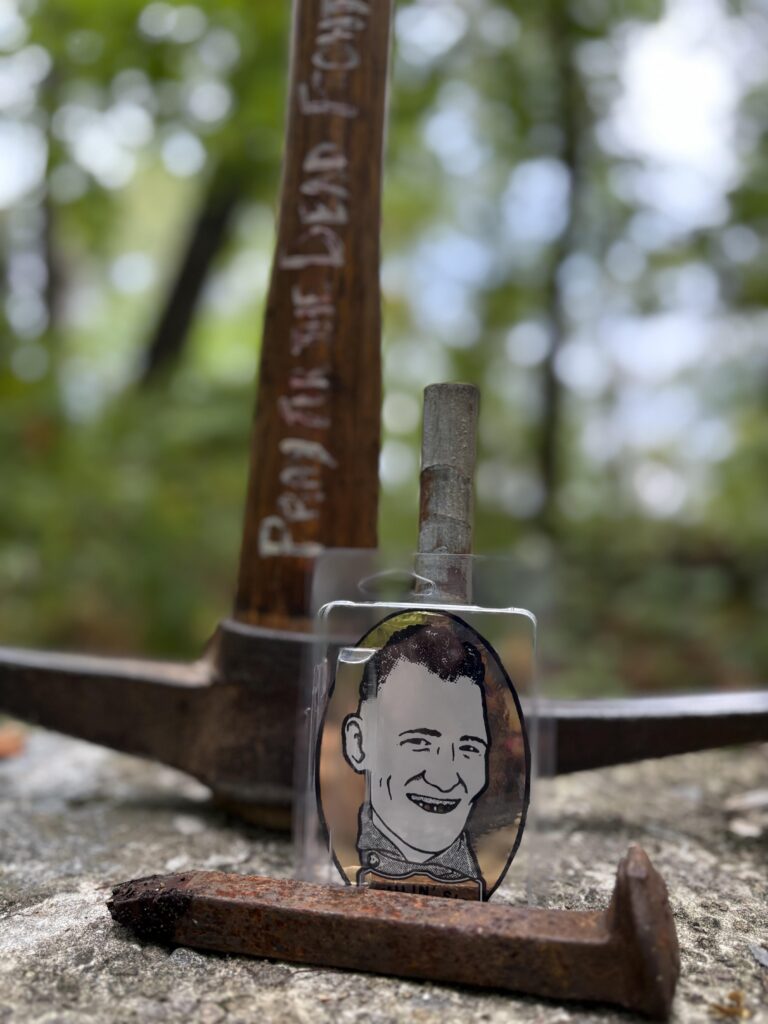
I visit the graves and memorials of labor heroes. I create memorials and tell their stories.
WHO WAS JOHN BROWN?
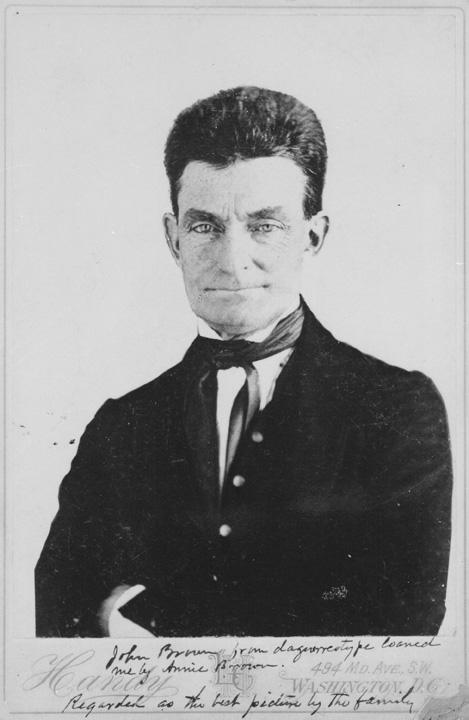
John Brown is a man with a complicated legacy, hailed as “one of the most marked characters, and greatest heroes known to American fame” by his contemporary and friend Frederick Douglass (Life and Times, 1881) and criticized as a madman and zealot by figures like Abraham Lincoln.
Before the Civil War, this clergyman first gained national notoriety fighting in Bleeding Kansas. Brown worked closely with abolitionists such as Harriet Tubman and Frederick Douglass to take direct action towards the cause of abolishing slavery in the United States and facilitating the freedom and safety of black and enslaved people. He was captured and executed by the State government after attempting to incite a slave rebellion in Harpers Ferry, (West) Virginia. The American Civil War would begin less than 2 years later.
Brown’s Defense
When it was time to give his defense, John Brown knew that he would likely be put to death. These were his last words to the court before his sentencing on November 2, 1859:
I have, may it please the Court, a few words to say. In the first place, I deny everything but what I have all along admitted:
the design on my part to free slaves.
I intended, certainly, to have made a clean thing of that matter, as I did last winter when I went into Missouri, and there took slaves without the snapping of a gun on either side–moved them through the country and finally left them in Canada. I designed to have done the same thing again, on a larger scale.That was all I intended.
I never did intend murder, or treason, or the destruction of property, or to excite or incite slaves to rebellion, or to make insurrection.
I have another objection; and that is,
it is unjust that I should suffer such a penalty.Had I interfered in the manner which I admit, and which I admit has been fairly proved–
for I admire the truthfulness and candor of the greater portion of the witnesses who have testified in this case–had I so interfered in behalf of the rich, the powerful, the intelligent, the so-called great,
or in behalf of any of their friends, either father, mother, brother, sister, wife, or children, or any of that class,
and suffered and sacrificed what I have in this interference,
it would have been all right;
and every man in this court would have deemed it an act worthy of reward rather than punishment.
This court acknowledges, as I suppose, the validity of the Law of God. I see a book kissed here which I suppose to be the Bible, or at least the New Testament.That teaches me that, “All things whatsoever I would that men should do to me, I should do even so to them.”
It teaches me, further, to
“Remember them that are in bonds, as bound with them.”I endeavored to act up to that instruction. I say, I am yet too young to understand that God is any respecter of persons.
I believe that to have interfered as I have done as I have always freely admitted I have done in behalf of His despised poor,
was not wrong, but RIGHT.Now, if it is deemed necessary that I should forfeit my life for the furtherance of the ends of justice, and
MINGLE MY BLOOD FURTHER WITH THE BLOOD OF MY CHILDREN
and with the blood of millions in this slave country
whose rights are disregarded by wicked, cruel, and unjust enactments, I submit; so
LET IT BE DONE!
Let me say one word further: I feel entirely satisfied with the treatment I have received on my trial. Considering all the circumstances. it has been more generous than I expected.But I feel no consciousness of guilt.
I have stated from the first what was my intention and what was not. I never had any design against the life of any person, nor any disposition to commit treason, or excite slaves to rebel, or make any general insurrection. I never encouraged any man to do so, but always discouraged any idea of that kind.
Let me say, also, a word in regard to the statements made by some of those connected with me.I hear it has been stated by some of them that I have induced them to join me. But the contrary is true.
I do not say this to injure them, but as regretting their weakness.
There is not one of them but joined me of his own accord,
and the greater part of them at their own expense. A number of them I never saw, and never had a word of conversation with, till the day they came to me;
and that was for the purpose I have stated.Now I have done.